
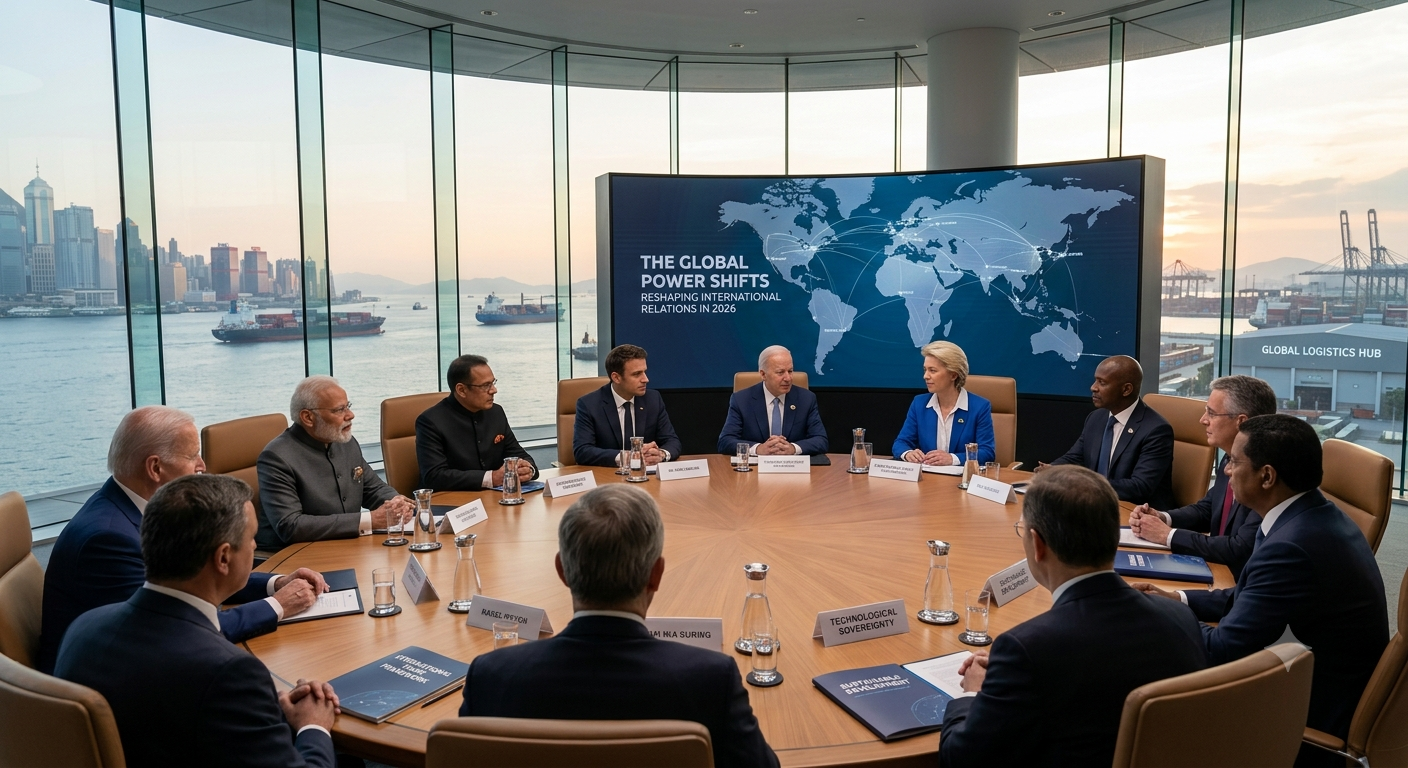
The international system in 2026 is undergoing a profound structural evolution. The rigid alignments of the late 20th century and the brief post-Cold War period of unipolar stability have given way to a fluid, multipolar landscape. Power is no longer concentrated exclusively in traditional capitals; instead, it is distributed across competing regional poles, middle-power coalitions, and technological epicenters.
The year 2026 marks a decisive tipping point in this transition. Geopolitical influence is defined less by broad ideological blocs and more by state interventionism, technological sovereignty, critical resource access, and transaction-based strategic partnerships. Understanding these shifts requires evaluating the structural economic, technological, and diplomatic forces driving today’s changing world order.
Why the Global Balance of Power Is Changing
The transformation of global geopolitics is not happening in a vacuum. It is propelled by a convergence of structural pressures that are redefining how nation-states exercise authority and project influence worldwide.
┌─────────────────────────────────────────────────────────────────────────┐
│                    DRIVERS OF GEOPOLITICAL TRANSFORMATION                │
├───────────────────┬───────────────────┬─────────────────────────────────┤
│ Economic Policy   │ Technology & AI   │ Resource Competition           │
│ State-led industrial│ Compute power,   │ Rare earths, semiconductors,    │
│ strategies & supply│ cyber dominance,  │ clean energy inputs, & water    │
│ chain resilience. │ & automation.     │ security.                       │
└───────────────────┴───────────────────┴─────────────────────────────────┘
-
Rise of Economic Nationalism: Laissez-faire economic integration has largely yielded to targeted state intervention. Major economies aggressively employ subsidies, export controls, and tariffs to shield strategic industries.
-
Technological Weaponization: Advanced computing, artificial intelligence, and semiconductor manufacturing are no longer mere commercial sectors—they are core pillars of national security.
-
Resource Scarcity & Energy Transition: Securing access to critical minerals (lithium, cobalt, rare earth elements), fresh water, and diversified energy sources has become a primary driver of foreign policy decisions.
-
Multipolar Realignment: Middle powers across the Global South increasingly reject binary choices between super-powers, opting instead for flexible “multi-alignment” to maximize their own strategic leverage.
The United States and the Changing Global Order
The United States maintains formidable economic strength, defense capabilities, and capital market influence. However, Washington operates within a far more contested international framework than in decades past.
American strategic focus remains firmly centered on great-power competition, particularly managing its bilateral relationship with China and containing systemic security threats. Washington’s policy apparatus increasingly fuses national security with domestic manufacturing capabilities. Through legislative mechanisms like the CHIPS and Science Act alongside targeted tariff policies, the U.S. continues to incentivize domestic manufacturing and “friendshoring” with key allies.
| Strategic Asset | Primary Challenge | Policy Approach |
| Global Currency & Financial Infrastructure | Fiscal stress and alternative payment networks | Protecting dollar clearing; enforcing targeted sanctions |
| Defense Innovation & Alliances | Overextended defense industrial capacity | Strengthening bilateral & minilateral partnerships (AUKUS, Quad) |
| Advanced Tech Ecosystems | Semiconductor & critical mineral supply dependencies | Nearshoring production; imposing strict tech export restrictions |
While the U.S. security umbrella remains vital to allies across Europe and East Asia, domestic political dynamics and fiscal considerations have encouraged a more transactional, result-driven approach to foreign engagements.
China’s Expanding Global Influence
China’s role in international relations during 2026 reflects its strategic push toward high-tech industrial autonomy and expanded global leadership. Facing domestic demographic and economic shifts, Beijing has redirected substantial capital into high-value manufacturing, renewable energy systems, and legacy/advanced semiconductor capacity.
                 ┌──────────────────────────────────────┐
                 │       Beijing's Power Projection     │
                 └──────────────────┬───────────────────┘
                                    │
         ┌──────────────────────────┼──────────────────────────┐
         ▼                          ▼                          ▼
┌─────────────────┐        ┌─────────────────┐        ┌─────────────────┐
│ Technological   │        │ Global South    │        │  Strategic      │
│ Sovereignty     │        │ Leadership      │        │ Dynamic in Asia │
│ EV export dominance│     │ Global Development│      │ Diplomatic outreach│
│ & green tech leadership│ │ Initiative & BRICS│       │ & maritime presence│
└─────────────────┘        └─────────────────┘        └─────────────────┘
China remains a fundamental trade partner for over 120 countries, leveraging infrastructure initiatives and industrial supply chains to solidify diplomatic links across Latin America, Africa, and Southeast Asia. Simultaneously, rising overcapacity tensions in clean energy and electric vehicles have created friction with European and North American markets, driving Beijing to deepen trade corridors within the Global South.
India’s Growing Role in Global Affairs
India has firmly established itself as a pivotal node in 2026’s multipolar geometry. Backed by sustained economic growth, a dynamic technological ecosystem, and favorable demographics, New Delhi exercises significant strategic autonomy.
-
The Bridge Between Blocs: India balances active membership in forums like BRICS and the Shanghai Cooperation Organisation (SCO) with deep engagement in Western-aligned security structures like the Quad.
-
Voice of the Global South: Positioned as an economic partner of choice, India advocates for the priorities of developing nations on global finance, energy transition timelines, and international governance reforms.
-
Tech & Industrial Manufacturing: Through industrial promotion policies and digital public infrastructure expansions, India is capturing a growing share of global manufacturing and software engineering capacity.
By avoiding fixed alliances while deepening bilateral ties worldwide, India has elevated its posture into that of a core global balancing power.
Russia, Europe, and the Future of Strategic Power
European security and strategic planning remain heavily influenced by ongoing regional conflicts and altered security realities.
The European Union’s Push for Strategic Autonomy
The EU has accelerated its pursuit of “strategic autonomy.” Driven by trade tensions and regional instability, European leaders are intensifying investment in internal defense capabilities, joint procurement models, and supply chain security.
                       ┌───────────────────────────────┐
                       │  EU Strategic Priorities 2026 │
                       └───────────────┬───────────────┘
                                       │
            ┌──────────────────────────┴──────────────────────────┐
            ▼                                                     ▼
┌───────────────────────────────┐                     ┌───────────────────────────────┐
│     Defense & Security        │                     │   Economic Statecraft         │
│ Expansion of joint NATO-EU    │                     │ Technology transfer rules,     │
│ defense production capacity   │                     │ local content mandates, & green│
│ and cyber defense networks.   │                     │ industrial strategy.           │
└───────────────────────────────┘                     └───────────────────────────────┘
Europe’s transition away from eastern pipeline energy has necessitated long-term structural adjustments. The bloc relies heavily on LNG imports, renewable power expansion, and new energy partnerships in North Africa and the Middle East, though elevated industrial energy costs remain a challenge.
Russia’s Strategic Alignment
Re-routed away from Western markets, Russia’s economy has increasingly integrated with non-Western trade systems. Moscow maintains a heavy emphasis on defense production and strategic exports—particularly crude oil, natural gas, fertilizer, and agricultural commodities—to buyers in China, India, and global markets. Russia continues to expand its diplomatic and defense presence across portions of Africa and the Middle East, positioning itself as a counterweight to traditional Western security frameworks.
The Rise of the Global South
One of the defining shifts of 2026 is the deliberate political and economic assertiveness of the Global South. Countries across Southeast Asia, Latin America, Africa, and the Middle East are actively reshaping international diplomacy.
Rather than committing to a single geopolitical actor, these states practice multi-alignment—leveraging competition between major powers to extract optimal trade, infrastructure, and technology investments.
┌─────────────────────────────────────────────────────────────────────────────┐
│                    PERSPECTIVES ON GLOBAL ALIGNMENT                         │
├───────────────────────────────┬─────────────────────────────────────────────┤
│ Bi-Polar Framework (Historical)│ Rigid blocs; forced choice between opposing │
│                               │ superpowers.                                │
├───────────────────────────────┼─────────────────────────────────────────────┤
│ Multipolarity (2026 Realities)│ Flexible alignment; issue-based coalitions, │
│                               │ regional trade deals, sovereign autonomy.   │
└───────────────────────────────┴─────────────────────────────────────────────┘
Middle East regional powers, including Saudi Arabia and the UAE, have leveraged their fiscal capital and energy production to build strategic bridges between Asia, Europe, and North America. Similarly, nations like Indonesia and Brazil use their control over critical mineral reserves (such as nickel and rare earths) to demand domestic processing investments rather than simply exporting raw materials.
Technology Is Becoming a Source of Geopolitical Power
In 2026, technology policy is foreign policy. National capabilities in critical sub-sectors determine state strength and strategic independence.
                 ┌───────────────────────────────────────────┐
                 │       PILLARS OF TECH POWER (2026)        │
                 └─────────────────────┬─────────────────────┘
                                       │
   ┌──────────────────────┬────────────┴───────────┬──────────────────────┐
   ▼                      ▼                        ▼                      ▼
┌───────────────┐  ┌───────────────┐        ┌───────────────┐      ┌───────────────┐
│ Semiconductors│  │ Artificial    │        │ Digital       │      │ Cyber Defense │
│ Fab access,   │  │ Compute power,│        │ Infrastructure│      │ Network       │
│ lithography,  │  │ LLMs, and     │        │ 5G/6G, undersea│      │ resilience &  │
│ & foundry tech│  │ national security│     │ cables, cloud │      │ AI monitoring │
└───────────────┘  └───────────────┘        └───────────────┘      └───────────────┘
-
Advanced Semiconductors: Silicon manufacturing remains the most critical strategic choke point in the global economy. Access to extreme ultraviolet (EUV) lithography equipment and advanced fabrication nodes dictates progress in both civilian and military applications.
-
Artificial Intelligence Infrastructure: Sovereign computing clusters, local dataset curation, and energy-dense data center installations are now treated as foundational infrastructure akin to power grids or ports.
-
Cyber Resilience: Cyber warfare and defensive automation operate continuously behind the scenes, protecting physical infrastructure, financial ledgers, and government systems.
Trade, Energy, and Supply Chains as Strategic Tools
Economic statecraft has supplanted traditional free-market integration. Weaponized trade tools, localized subsidies, and supply chain re-routing define global commerce in 2026.
-
Critical Minerals: The concentration of lithium, cobalt, graphite, and rare earth element processing continues to create supply chain vulnerabilities. Western states are making multi-billion-dollar investments to diversify processing locations, though scaling capacity takes years.
-
Maritime Choke Points: Heightened risks along international transit corridors—including the Red Sea, the Strait of Malacca, and the Bab-el-Mandeb—have raised logistics costs and prompted nations to explore overland transit infrastructure.
-
Friendshoring and Regionalization: Corporate logistics strategies increasingly prioritize supply resilience over absolute cost efficiency, establishing hub-and-spoke manufacturing arrangements within secure regional jurisdictions.
Alliances Are Evolving
Global governance and diplomatic engagement are increasingly characterized by flexible minilateralism—smaller, task-oriented coalitions built to address specific security or economic priorities.
┌─────────────────────────────────────────────────────────────────────────┐
│                     EVOLUTION OF GLOBAL ALLIANCES                       │
├───────────────────────────────────┬─────────────────────────────────────┤
│ Traditional Frameworks            │ Emerging Minilateral Formats        │
├───────────────────────────────────┼─────────────────────────────────────┤
│ Formal binding defense treaties;  │ Agnostic, modular alliances;        │
│ consensus-based global bodies     │ focused project agreements (Quad,   │
│ (UN, WTO) experiencing gridlock.  │ AUKUS, expanded BRICS, I2U2).       │
└───────────────────────────────────┴─────────────────────────────────────┘
While foundational pacts like NATO remain primary defense backstops, countries are increasingly turning to dynamic partnerships to solve localized economic and strategic problems. This shift has weakened consensus-driven global institutions like the World Trade Organization (WTO) and the United Nations Security Council, where institutional gridlock frequently stalls broader global policy coordination.
What These Power Shifts Mean for the Global Economy
The transition to a multipolar, security-first global environment presents structural economic consequences for international markets:
-
Higher Structural Inflation: Moving away from absolute cost-optimized global production toward regionalized, security-focused supply networks inherently elevates input prices.
-
Capital Flow Fragmentation: Sovereign wealth funds, venture capital, and institutional investments are increasingly subject to national security screenings, export restrictions, and geopolitical risk assessments.
-
Diversification of Trade Settlement: While the U.S. dollar remains the world’s primary reserve currency, bilateral energy and commodity settlements in non-dollar denominated currencies (such as the Renminbi, Rupee, and Dirham) continue to expand.
What Could the Global Order Look Like Next?
Looking past 2026, international analysts weigh three realistic potential trajectories for the international system:
-
Managed Multipolarity: Major powers establish formal guardrails and operational agreements on high-stakes domains—such as AI deployment, space assets, and maritime lanes—mitigating major conflict while competing intensely in trade and technology.
-
Fragmented Regionalization: The world economy separates into distinct regional economic spheres operating on incompatible technology standards, separate payment systems, and distinct trade frameworks.
-
Escalating Geopolitical Frictions: Persistent resource scarcity, industrial competition, and security rivalries test existing strategic deterrents, leading to frequent regional disruptions and systemic instability.
Navigating the Contested Order of 2026
The global landscape in 2026 demonstrates that international power is more distributed, competitive, and multifaceted than at any point in modern history. Economic capacity, technological edge, and resource access have become as critical to national defense as military strength.
In this environment, success for states and global institutions depends on strategic flexibility. As established powers adjust to contested leadership and emerging economies assert their independence, the international order will continue to be shaped not by rigid global systems, but by dynamic, overlapping networks of economic, technological, and strategic influence.
-

-

-

-


